
Innovation through Insights: How Data Transforms the Classroom Experience


Note: This will be the final Substack issue of Eddify Me, as we will soon be moving to a permanent blog. More information below!
We hope everybody is having a great summer so far - it’s a much deserved break for all. In this issue of Eddify Me, we bring you exciting news about the transformative power of integrating data analysis into your teaching practice.
We explore how data-driven research is revolutionizing academic disciplines, and provide examples of how data is being utilized in classrooms. From math and science experiments to analyzing historical trends and improving reading comprehension, data-driven education is shaping the future of teaching and learning.
In this newsletter, we will be introducing how you and your students can use data analysis in different subjects to enhance learning
In Math, students analyze the real world data to understand mathematical concepts.
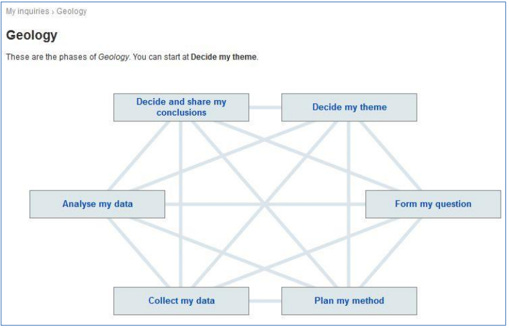
In Science, students analyze data, create designs by synthesizing data and conduct experiments to make conclusions.
In Social Studies, students analyze patterns and trends to gain a deeper understanding of complex concepts.
In English, students learn to think critically to evaluate the evidence and make informed literary choices.
Unleashing the Power of Numbers: Data-Driven Learning in Mathematics
In math class, students can learn about statistics and probability by analyzing real-world data such as weather patterns and population growth. They can also use data to create models that represent everyday situations. This helps them see how math concepts are relevant in our daily lives and encourages them to apply their skills outside of the classroom.
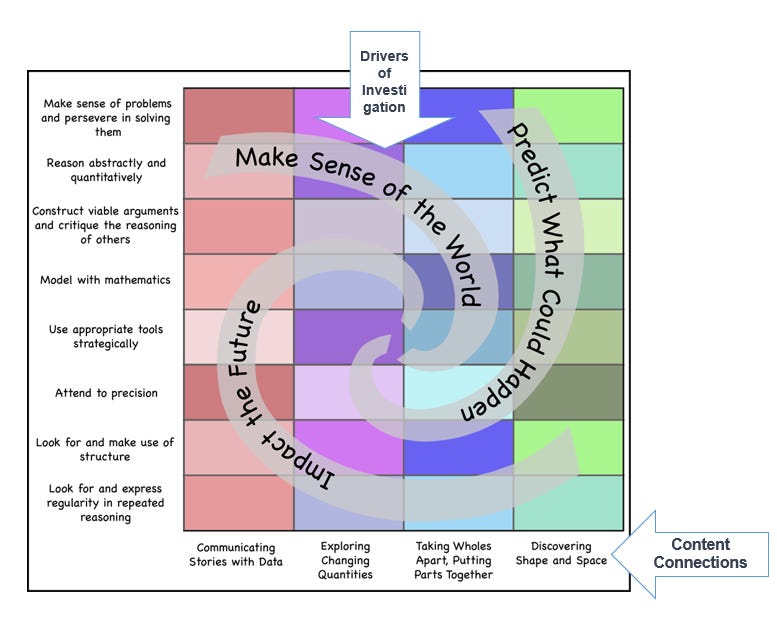
Some states have begun weaving data literacy into statewide standards for the subject. For instance, the California Department of Education (CDE), Instructional Quality Commission (IQC), and State Board of Education (SBE) produced a Mathematics Framework for California Public Schools: Kindergarten Through Grade Twelve (Mathematics Framework) which provides a conceptual framework alongside ideas for teaching data literacy in the classroom. The framework includes three Drivers of Investigation (the “why” of learning math), which are paired with four Content Connections (the “how and what” of math, linked to California state standards). The Drivers of Investigation propel the learning of the content framed in the Content Connections.
The relationship between content, mathematical practices and the drivers of investigation is highlighted in the diagram below:
Exploring the Wonders of Science and Unveil the Deeper Secrets of Social Science: Data and Analysis in Action
In science class, data and analysis are essential for understanding scientific explanations. Students can analyze data on plant growth or the properties of different materials to learn about photosynthesis or physical and chemical properties. They can also design and conduct experiments, drawing conclusions based on their findings. This approach helps students think like scientists and apply their knowledge to real-life problems.
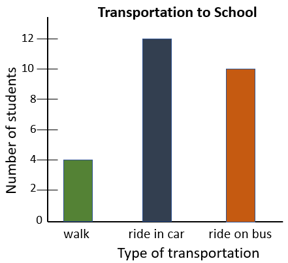
To give an example appropriate for elementary grades, a student might observe from a bar graph that most people ride in a car and only a few walk. A teacher can ask questions about why that might be the case. Students might relate to living very close to school, where walking is a short distance. Their friend lives a long way and needs to ride in a car. This example is highly relevant, because it’s concrete and what they do every day. This lays a strong foundation for discussion of other transportation modes (such as trains and airplanes) which cover even farther distances.
Here’s an example (page 5) of how the researchers from the Cornell University Department of Education and the Paleontological Research Institution (PRI) in Ithaca, New York, collaborated to actively support teachers and children in learning about science inquiry and concepts related to evolutionary theory.
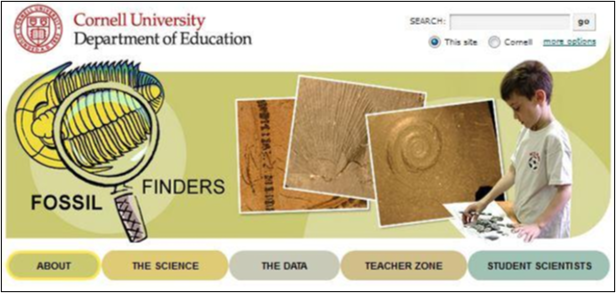
The Fossil Finders project strives to bridge research to practice by engaging teachers and children in classrooms carrying out an authentic investigation of Devonian fossils. The goals of the project include helping children and teachers to understand how scientists use evidence to build theory, enhance abilities to do inquiry, and stimulate interest in paleontology, biology, and geology in target demographics (females, low socioeconomic status [SES] and English language learners (ELL] students).
Social Studies classes provide an opportunity to use data and analysis to understand historical events and societal trends. Students can analyze data on immigration patterns or voting trends to develop a deeper understanding of cultural diversity and democracy. They can also create maps and charts to represent historical and contemporary trends, which can help them visualize and understand complex concepts.
Unraveling Literary Dimensions: Data-Infused Exploration in English Education
In English class, data and analysis can improve reading comprehension and critical thinking skills. By analyzing data on character development or word frequency, students can gain insights into literary themes and improve their vocabulary. Using data to support persuasive essays or arguments also teaches students to evaluate evidence and make informed decisions.
School and Class Administration
Read this article to find out ways in which data can help teachers, parents and school administrators in supporting their students. Data can also help inform instructional strategy and differentiation in the classroom - for instance, to support the growth of ELLs.
Introducing data analytics with Eddy!

In this captivating lesson, students will employing digital tools to collect targeted data from their peers in the classroom. They will transform their findings into visually engaging bar graphs, but that's just the beginning of their data-driven journey. By harnessing their computational thinking skills, students will embark on the exciting task of designing and developing their very own app, showcasing their data in a unique and creative manner.
All lesson packages on Eddy are 100% free to download and use - and will always remain this way. Don't miss the opportunity to explore this transformative lesson that empowers students through the power of data!
To our readers: Over the past year, we have used the Substack platform to share tips and tricks regarding the use of emerging technologies in education. While this remains a core element of our mission, we have decided to do so via alternative channels, moving forward. In the coming week, you will receive more information about how to stay connected with Eddify Me - watch this space!